
Food Education
What Are Pulses? A Beginner’s Guide to Indian Pulses
Pulses are familiar ingredients in kitchens across India. From everyday dal to chickpea snacks, these versatile foods appear in countless recipes. But what exactly are pulses, what varieties are commonly used, and how do they fit into everyday cooking?
In this beginner-friendly guide, DALPANEE explores the basics of pulses and their role in Indian food traditions.
What Are Pulses?
Pulses are the edible dry seeds of leguminous plants harvested for food. Common examples include lentils, chickpeas, dry peas and many types of beans. They are used in a wide range of dishes around the world.
In India, pulses are especially familiar because they are used in dals, curries, soups, snacks, batters and flour-based preparations. Different varieties offer different flavours, colours and textures.
The word “pulse” is sometimes used interchangeably with “dal” in everyday conversation, although the terms do not always mean exactly the same thing. Dal commonly refers to split pulses or dishes prepared from them.
What Are the Common Types of Pulses?
1. Lentils (Masoor Dal)
Lentils are small, lens-shaped seeds available in varieties with different colours. Red or orange split masoor dal is popular in Indian cooking because it softens during cooking and works well in soups, dals and stews.
2. Chickpeas (Chana)
Chickpeas are widely used in Indian cuisine. Whole chickpeas can be cooked in curries, while roasted chana is a familiar snack. Chickpeas can also be ground into flour or processed into other food ingredients.
3. Mung Beans (Moong)
Mung beans are used whole, split and sometimes sprouted. Moong dal is common in everyday meals, and different forms of mung beans can be used in soups, khichdi and other recipes.
4. Pigeon Peas (Toor or Arhar Dal)
Pigeon peas are an important ingredient in many Indian households. Toor dal is often cooked with spices and other ingredients to create a familiar accompaniment to rice or roti.
5. Black Gram (Urad Dal)
Black gram is used in dishes such as dal makhani and in preparations for foods including idli and dosa. Whole, split and skinned forms are used for different culinary purposes.
6. Dry Peas
Dry peas are used in soups, curries and regional Indian dishes. Their texture and flavour make them suitable for a variety of cooked preparations.
Are Pulses the Same as Legumes?
Legumes are plants belonging to the legume family, which includes beans, peas, lentils and chickpeas. The term “pulses” generally refers specifically to the dry edible seeds of certain leguminous crops.
Not every legume is classified as a pulse. For example, fresh green peas and green beans are generally treated as vegetables, while dry peas and dry beans fall within the usual pulse category.
Why Are Pulses Used So Often in Indian Cooking?
Pulses are adaptable ingredients. They can be boiled, pressure-cooked, ground, roasted or combined with grains, vegetables and seasonings.
They also provide nutrients such as plant protein, dietary fibre, carbohydrates and various minerals. The exact nutritional composition differs by pulse variety and preparation method.
As with any food, the nutritional contribution of pulses depends on the quantity eaten and the overall diet. Individual dietary requirements can vary.
How Are Pulses Used Beyond Traditional Dal?
Pulses are not limited to bowls of cooked dal. They can be used in roasted snacks, flour, batters, soups, savoury mixes and other food preparations.
Roasting and grinding can change their flavour, texture and suitability for different recipes. The final result depends on the pulse, the processing method and the other ingredients used.
These different uses show how familiar ingredients can inspire a wide range of food ideas.
What Is the Connection Between Pulses and DALPANEE?
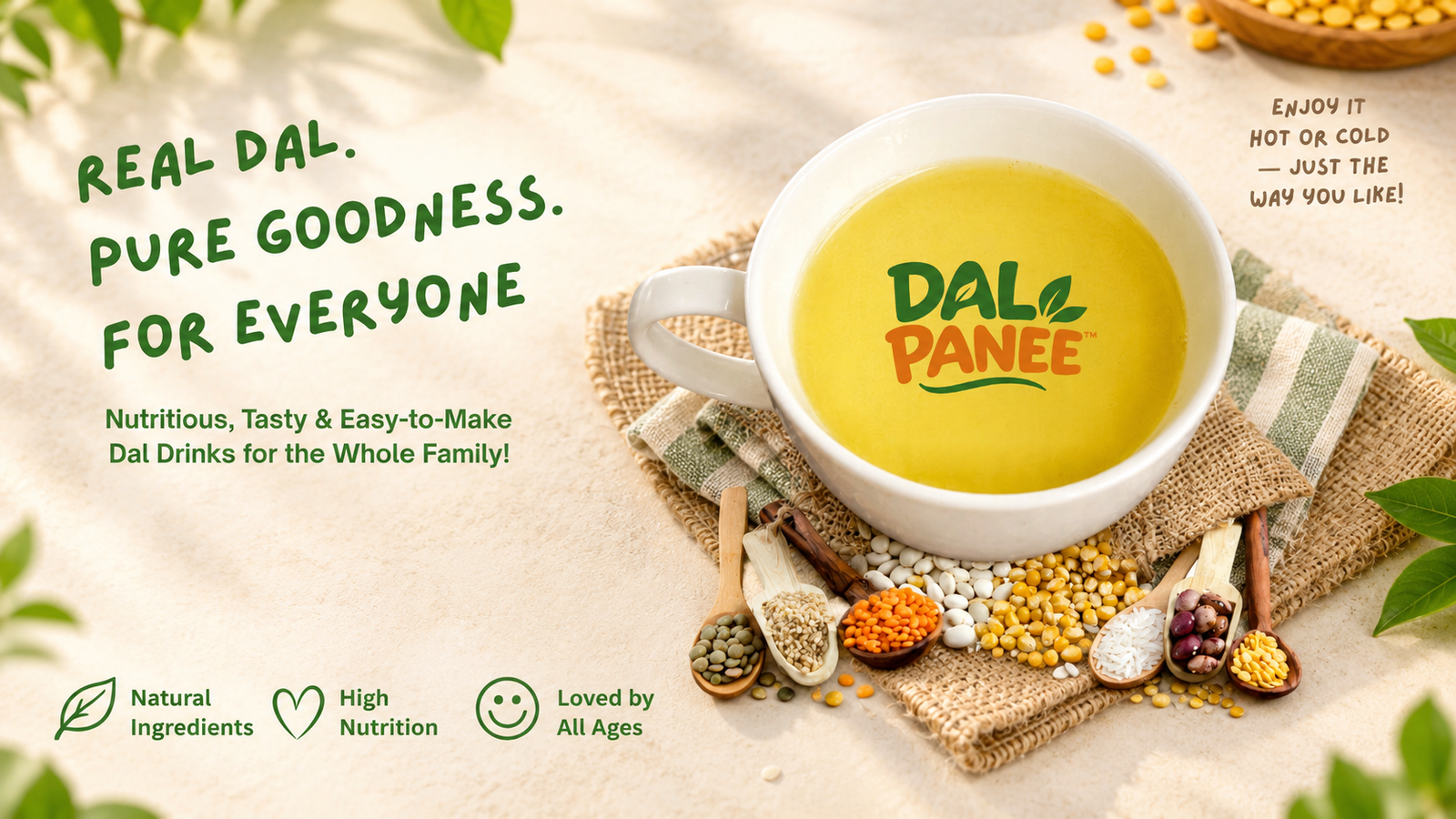
DALPANEE is exploring a powdered drink concept inspired by familiar Indian ingredients and designed for preparation with hot or cold water.
Pulses offer a useful starting point for understanding this concept because they already have a place in Indian food culture. However, the ingredients and nutritional properties of a particular drink must always be confirmed from its actual formulation and product label.
We want to make food knowledge easier to explore while helping readers understand ingredients, preparation methods and informed food choices.
Visit the official DALPANEE website to learn more about the brand.
How Can You Start Exploring Pulses?
- Try learning the names of common pulses used in your kitchen.
- Compare their colours, shapes, flavours and textures.
- Explore different traditional recipes using lentils and beans.
- Read ingredient and nutrition labels on packaged pulse products.
- Store dry pulses according to food-safety recommendations.
Exploring pulses can be a simple way to learn more about everyday ingredients and the food traditions associated with them.
Frequently Asked Questions About Pulses
What are pulses in simple words?
Pulses are the dry edible seeds of certain leguminous plants. Lentils, chickpeas and dry peas are common examples.
What is the difference between dal and pulses?
Pulses is a broad food category. Dal often refers to split pulses or a cooked dish made using them in Indian cuisine.
Which pulses are commonly used in India?
Common varieties include masoor dal, moong dal, chana, toor dal and urad dal. Their use varies by region and recipe.
Do pulses contain protein?
Yes. Many pulses provide plant protein. The amount depends on the variety, serving size and whether nutritional values are measured for the dry or cooked food.
Can pulses be used in powdered foods and drinks?
Yes. Pulses can be processed into flours and powders for various food applications. Whether a particular powder is suitable for a drink depends on its formulation and intended preparation method.
Where can I learn more about DALPANEE?
Visit dalpanee.in for information about the brand and its products.